The first, and most daunting, legal challenge to Tuberville’s candidacy has been filed
Tommy Tuberville's biggest challenge has now been filed in Montgomery Circuit Court.
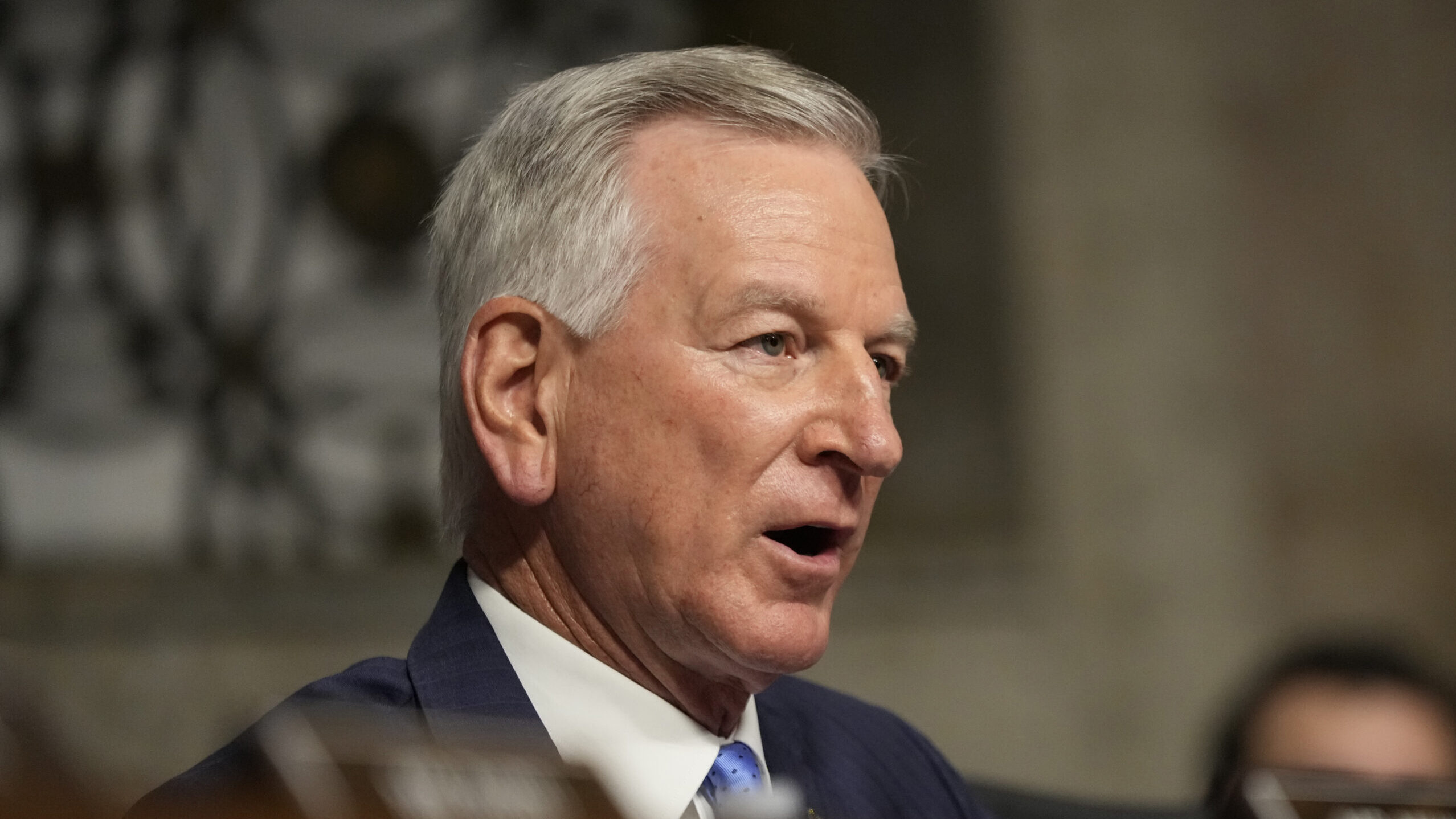
The biggest challenge to Tommy Tuberville’s campaign for governor is now officially in a Montgomery Circuit Court.
A lawsuit, a quo warranto legal challenge, filed Wednesday by a pair of military veterans is challenging Tuberville’s eligibility to be the Republican nominee for governor based on his residency. They contend Tuberville does not meet the state’s minimum requirement of being a resident citizen of Alabama for the past seven consecutive years.
“Relator Plaintiffs contend that Tuberville is constitutionally prohibited from being certified as the nominee or serving as Governor because he fails to satisfy the 7-year durational residency requirement contained in the Alabama Constitution,” the complaint reads. “As such, Plaintiffs contend that Tuberville has ‘usurp[ed], intrude[d] into or unlawfully holds or exercises a public office’ and seek relief pursuant to the Alabama quo warranto statutes.”
Tuberville has claimed that he meets the residency requirements by virtue of a modest 1,500-square foot home in Auburn, which his wife and son have owned since 2017. Tuberville was added to the deed in 2024. However, documents and numerous records show Tuberville appears to spend most of his time at the family’s 5,000-square foot beach home in Santa Rosa, Florida, which Tuberville and his wife, Suzanne, have owned since 2004.
The quo warranto challenge has always been Tuberville’s most concerning obstacle in his quest to overcome residency questions and assume the nomination for governor from the Alabama Republican Party. That’s because unlike all other challenges, it will focus entirely on his ability to meet the statutory requirements under the law to hold the office and it will not be decided by obviously partisan parties.
Until now, all of the challenges to Tuberville’s eligibility have been heard by the Alabama Republican Party, which was never inclined to boot him from the ballot and wasn’t beholden to the same standards as a court of law. Another challenge that was filed in circuit court was not judged on its merits, but was dismissed because the court, at that point, did not have standing to rule on the matter.
This challenge is different from both of those. A quo warranto challenge can only be filed, according to state law, after a candidate is certified as the party’s nominee. At that point, the person is considered a quasi-state official who is beholden to the requirements of the office for which he or she is seeking. For governor, that means establishing that you have been a resident citizen of Alabama for the last seven consecutive years.
Additionally, the quo warranto challenge instructs the court to expedite all proceedings, including discovery responses and responses to filings, meaning a court could force the Tuberville camp to produce documents and sit for depositions in weeks instead of the typical months it might ordinarily take. A motion filed with the challenge requests that the court expedite all responses, as required for such a challenge, and promptly set a court date for a jury trial following expedited discovery.
Following the recent post-primary challenge, in which the ALGOP steering committee cleared Tuberville to be the party’s nominee, challenger Ken McFeeters said he was told by a committee member that Tuberville’s legal team would seek to “run out the clock” on any legal challenge filed in court. Once the Nov. 3, elections are held, the quo warranto challenge would be moot.
However, under the expedited rules of the challenge, such delays might be harder to accomplish, particularly in a courtroom where a presiding judge will not be inclined to alter rules or give preferential treatment, as Republican Party officials did in its hearing.
Even if the matter doesn’t reach a conclusion prior to the general election, the public disclosure of documents and testimony from depositions could prove extremely problematic for Tuberville’s campaign. Also filed with the challenge are the first interrogatories that Tuberville will be required to answer, the first discovery requests and two orders for Tommy and Suzanne Tuberville to sit for individual depositions.
Among the documents requested are Tuberville’s state and federal tax returns, his utility bills showing power and water usage at both his Auburn and Florida houses and the insurance policies for his covered automobiles. The interrogatories ask both Tubervilles how many nights per week they have each spent at the house in Auburn and whether Tommy Tuberville was a resident of Alabama when he voted in Florida in 2018.
The plaintiffs in the case are represented by Birmingham attorney Barry Ragsdale – the same attorney who brought the residency challenge against Republican state Rep. David Cole in 2023. That case resulted in Cole being arrested and removed from office for claiming a friend’s house as his residence in order to qualify for office. His arrest and conviction were for voter fraud charges stemming from using the improper address to both register to vote and cast a ballot at the improper polling place.