Runoffs test whether Alabama GOP can answer Reagan’s question
Alabama remains a Republican state, but when one party controls everything, voters eventually judge it by whether life has gotten better.
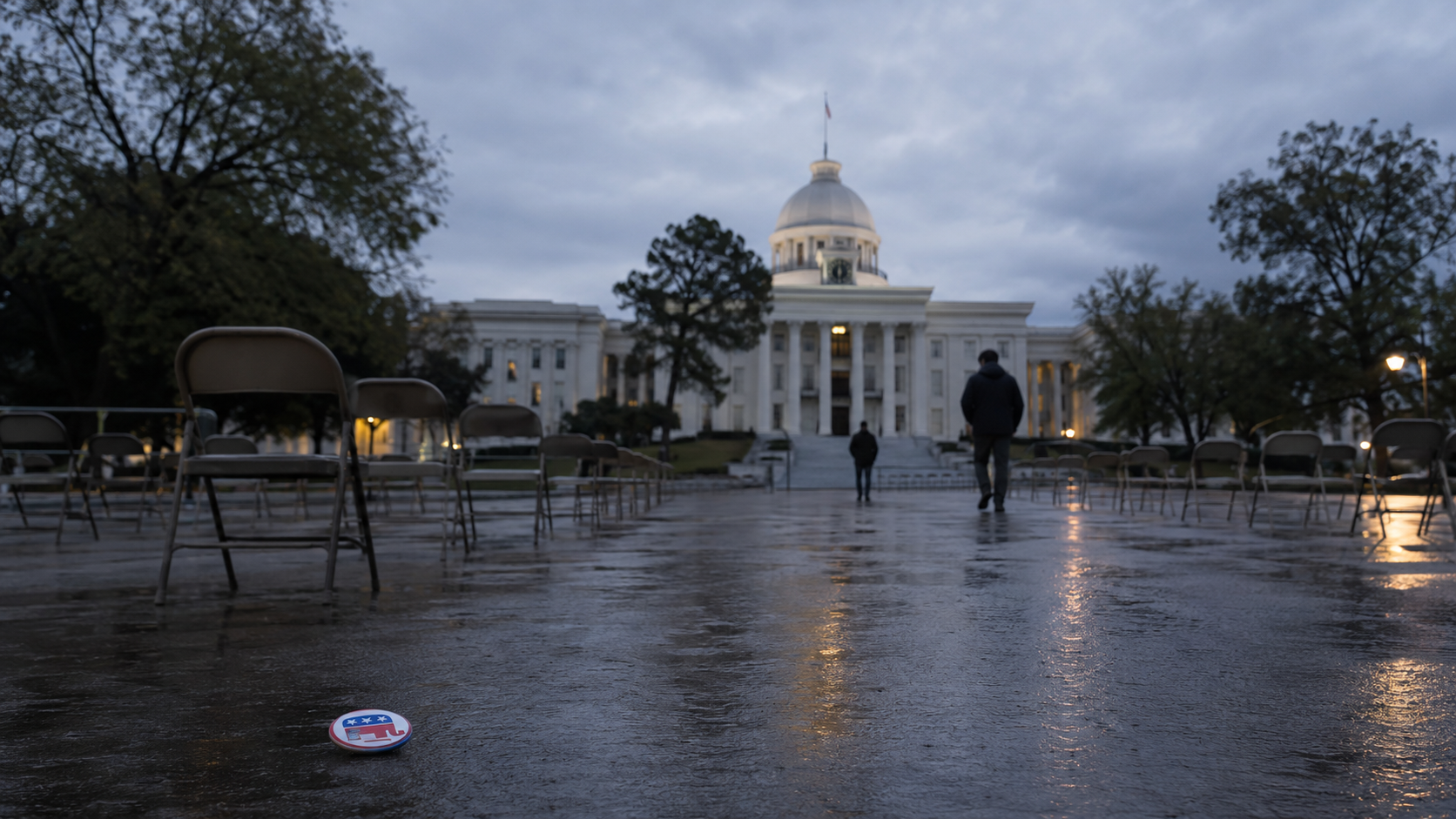
Alabama is still a Republican state. The question Tuesday is whether Republican voters are being given a reason to show up.
In Tuesday’s primary runoffs, Republicans will choose nominees for Alabama’s open U.S. Senate seat and several statewide offices. Barry Moore faces Jared Hudson in the Republican runoff for U.S. Senate. John Wahl faces Wes Allen for lieutenant governor. Katherine Robertson faces Jay Mitchell for attorney general.
These are important offices. But importance does not guarantee excitement, and this Republican runoff season has produced little of it.
That may be because voters are asking a more basic question than the candidates are answering.
In 1980, Ronald Reagan asked voters, “Are you better off than you were four years ago?” It remains one of the most powerful questions in American politics because it cuts through campaign noise and asks voters to measure politics against their own lives.
That question is dangerous for any governing party. In Alabama, it belongs to Republicans.
Republicans control the governor’s office. They hold every statewide constitutional office. They control the Legislature. They dominate the state’s congressional delegation. They set the agenda, write the budgets, pass the laws and decide what receives attention.
There are not many Democrats left to blame for the condition of Alabama government.
Alabama voters are not ready to turn against Republicans. Most are not. But voters do not have to switch parties to send a message. Sometimes they simply stay home.
The May primary may have been such a message.
Overall turnout barely changed from 2022 to 2026, but the partisan makeup of that turnout changed dramatically. Republican primary ballots fell from 660,789 in 2022 to 493,376 in 2026, a decline of 167,413 votes. Democratic primary ballots rose from 188,578 to 364,635, a gain of 176,057 votes. Total ballots increased by only 6,327 statewide.
Alabama has not suddenly become competitive statewide. But those numbers show Republican softness.
The Republican electorate that dominated the 2022 primary did not return with the same force in 2026. In a general election, that would matter. In a runoff, it may matter even more.
Runoffs are elections for the committed, the organized and the motivated. They reward candidates who can identify their voters and get them back to the polls. They punish candidates who assume party loyalty, name identification or endorsements will do the work for them.
Turnout is not just participation. In politics, turnout is a form of consent. When voters show up, they are saying the party still matters, the races still matter and the candidates are worth the effort. When they stay home, they may not be changing sides. They may simply be withholding enthusiasm.
The warning signs were visible months ago. Earlier polling showed Republican primary voters were not disengaged. They approved of Trump. They said they were likely to vote. Many believed the state was headed in the right direction. But across major statewide races, unusually large numbers of voters remained undecided.
That was a signal.
The undecided voters showed a failure of persuasion. The May turnout may have shown a failure of motivation.
Trump remains the most powerful figure in Republican politics, and his endorsement still matters in Alabama. He endorsed Moore in the Senate race and Wahl in the lieutenant governor’s race, giving both candidates a powerful advantage in a low-turnout Republican runoff.
But an endorsement is not a field operation. It does not automatically make an uninspired voter leave work, drive to a polling place and cast a ballot in the middle of June.
That is the challenge facing Republican candidates.
Much of this campaign season has been built around familiar themes: who is the strongest conservative, who is most loyal to Trump, who is toughest on the left and who will defend Alabama from enemies real or imagined.
That language still works with many Republican voters. Fear, anger and resentment are powerful political motivators. But they are not the only things that move voters.
Hope matters, too. So does relief. So does the belief that someone in public life understands what ordinary families are facing.
That is where Reagan’s question becomes more than a line from history.
Are families better off? Are groceries cheaper? Is insurance more affordable? Are hospitals more secure? Are schools stronger? Are roads better? Are wages keeping pace? Does government feel like it is solving anything?
Or does politics mostly feel like another argument on television?
Those questions live much closer to the kitchen table than most campaign ads.
Polling has shown the same basic tension. Republican primary voters say they want lawmakers focused on economic issues, including inflation, taxes, jobs, government spending and the cost of living. They say groceries, insurance, health care, fuel and everyday expenses are weighing on their families.
That is the gap.
The candidates are speaking in the language of enemies. The voters are living in the language of costs.
Culture-war issues matter to Republican voters. But the daily pressure on families is real, and when voters are asked what matters most, they keep returning to practical concerns.
That is where policy matters.
Politics cannot live forever on grievance. Campaigns can tell voters whom to blame, but governing parties eventually have to answer what they have built. They have to explain why life is better, why services work, why communities are stronger and why the future is more secure.
Kansas offers the warning. It did not become a liberal state. But after governor Sam Brownback and Republican lawmakers promised that deep tax cuts would deliver growth, conservative theory ran into practical reality. Revenue fell short of expectations, schools and public services came under pressure, and the Republican-controlled Legislature eventually rolled back much of the experiment.
The lesson is not that Alabama is Kansas. It is that conservative voters are still practical voters. They may agree with the ideology. They may prefer the party. But when one party controls government, voters eventually ask whether the governing theory is making life better.
That is the deeper truth.
When one party controls everything, voters eventually stop judging it by what it says and start judging it by whether life has gotten better.
For Alabama Republicans, Reagan’s question is no longer aimed only at Washington. It is aimed at them.
What has been the answer on grocery costs? On insurance? On rural hospitals? On schools? On roads? On wages? On health care? On making life feel more secure for ordinary families?
Saying the other side would be worse is not enough. Neither is saying the left is dangerous or Washington is broken.
In Alabama, Republicans are not merely the opposition to national Democrats. They are the governing party. They own the condition of the state in a way no party can escape forever.
Most voters will not abandon Republicans. But voters can grow tired. They can grow less urgent. They can decide that a race does not matter enough to interrupt their day.
That is what Tuesday will test: whether Republican candidates can still move Republican voters.
They must do more than frighten them. They must do more than anger them. They must do more than remind them whom they are supposed to oppose. They must move them enough to leave home, go to the polls and believe that voting in these races might make some difference in their lives.
The May primary did not show a Republican collapse. It showed Republican softness.
Tuesday will show whether that softness has become something more troubling for Alabama’s dominant party: an enthusiasm gap among its own voters.
The danger for Republicans is not that Alabama suddenly turns blue. It is that voters who still call themselves Republicans stop believing these races matter enough to leave the house.
Reagan’s question still endures because it is simple, personal and unforgiving:
Are you better off than you were four years ago?
For Alabama Republicans, that question now lands close to home.