Panel hosting state advocacy groups recaps major bills of 2026 Session
Advocates from across Alabama shared takeaways from the session, highlighting prison, energy and voting rights reforms alongside stronger public engagement with policymakers.
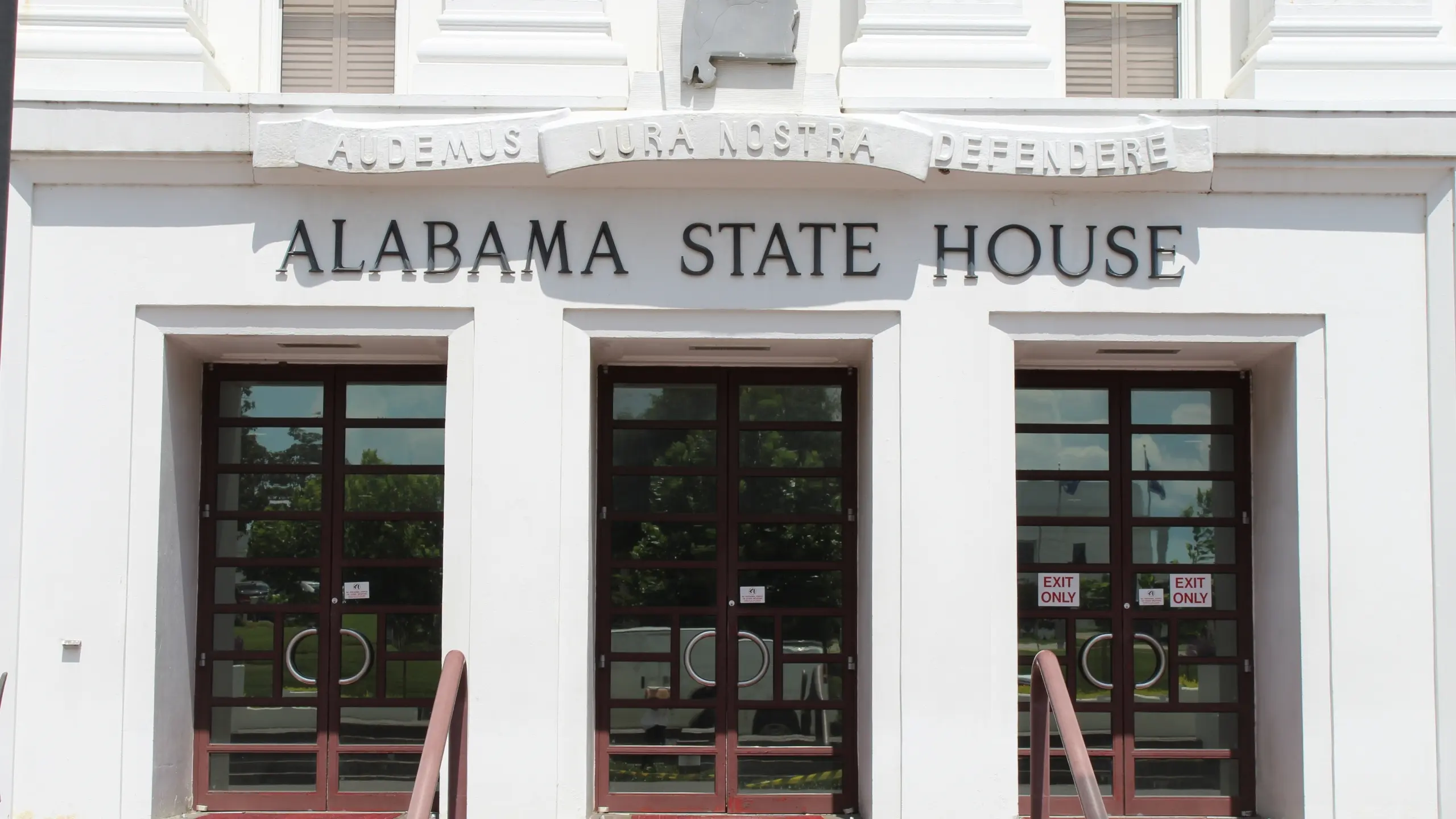
During a forum convened last week to recap the 2026 Session, leaders of advocacy groups from across Alabama shared their views on some of the year’s most impactful bills.
The panel was convened by the Birmingham-based citizen activist groups Make a Difference in Alabama and H.I.V.E. Alabama, marking the sixth annual Alabama Legislative Review hosted by Make a Difference.
The event saw discussions of legislation advanced and passed during the 2026 session from leaders representing the League of Women Voters of Alabama, Read Freely Alabama, Birmingham Indivisible, the Alabama Rivers Alliance, Moms Demand Action for Gun Sense Alabama, Alabama Arise, the Action Coalition for Transit and Alabama Appleseed Center for Law and Justice.
Elaine Burdeshaw, policy director for Alabama Appleseed, opened the event with a report on legislation monitored by Appleseed related to oversight of the Alabama Department of Corrections and the Board of Pardons and Paroles.
Senate Bill 316, sponsored by Senator Larry Stutts, R-Tuscumbia, would have created a corrections oversight board, removed investigative authority for investigations within Department of Corrections facilities from the DOC’s Law Enforcement Services Division, placing it with the Alabama Bureau of Investigations.
Although the bill was not passed during the session, Burdeshaw highlighted that discussions held between Stutts, the DOC and Senate President Pro Tempore Garlan Gudger, R-Cullman, led to the development of an oversight pilot program to be housed at Julia Tutwiler Women’s Correctional Facility and two to three men’s penitentiaries.
Burdeshaw described the program, to be led by the Department of Examiners of Public Accounts, as carrying out many of the reforms proposed by SB316. The department is currently developing a framework for the program, and the initiative’s development and findings are expected to be reported publicly during future Joint Prison Oversight Committee meetings.
“We all agreed and understood that, as far as kind of the monitoring and inspection side of oversight, they could already do that without having to pass legislation,” Burdeshaw said. “We’re thrilled about that. Mostly, we were excited because we worked with a lot of families who have loved ones incarcerated, and they felt really good about this step, and saw it as really positive movement.”
Senate Bill 254, sponsored by Senator Sam Givhan, R-Huntsville, which Burdeshaw described as an additional legislative priority for Alabama Appleseed, received final passage last week and has been sent to Gov. Kay Ivey’s desk.
The legislation will allow the Board of Pardons and Paroles to hold hearings to review and decide whether to reinstate parole for individuals whose parole was revoked for a charge that was later dropped or downgraded.
Charles Miller, policy director for the Alabama Rivers Alliance, led the panel’s discussion of environmental and energy regulations the legislature considered during the session.
Miller described the public reaction to issues such as the legislature’s push to restructure the Public Service Commission as indicating increased awareness of and engagement with policy development among Alabamians.
The policy director highlighted public opposition to House Bill 392, a failed bill that proposed switching the three-member PSC from an elected to an appointed body.
“There was really a level of engagement that I have just never seen on an issue like this among Alabamians, and it was, you know, truly it was left, right and center,” he said. “It was people from all walks of life who were very upset about the potential of losing their ability to choose their public service commissioners through elections.”
While Miller expressed apprehension regarding certain revisions made to House Bill 475, the Power to the People Act, a subsequent PSC reform measure sponsored by Representative Mack Butler, R-Rainbow City, and enacted into law, he reemphasized his support for the level of community engagement seen throughout the session.
“[HB475 is] kind of now more of a mixed bag,” Miller said. “It did create this secretary of energy position, who’s going to get to dictate what the Public Service Commission can look at, what goes on your agenda. But on the flip side, now we’re gonna have formal kind of rate cases for the first time in my lifetime in Alabama.”
“All of this is kind of, you know, still evolving, but again, the big takeaway for me was, we saw people get engaged, in a way, and at a depth, that I had not seen before, and that really gives me a lot of hope for the future,” he added.
Miller went on to express disappointment with the passage and enactment of Senate Bill 71, legislation sponsored by Senator Donnie Chesteen, R-Geneva, that bars state agencies such as the Alabama Department of Environmental Management from adopting environmental regulations beyond those of the federal government.
“This is really problematic because I think we all know, in general, the federal government doesn’t always regulate everything that perhaps ought to be regulated,” he said. “That’s the way the Clean Air Act and Clean Water Act were designed—there’s supposed to be room for states to step up. And this put kind of an impossible burden of proof on Alabama’s regulators to step up in these circumstances.”
Miller, meanwhile, spoke in support of House Bill 403, legislation sponsored by Representative Neil Rafferty, D-Birmingham, to mandate that the PSC must ensure that “large load” data centers pay for their infrastructure costs, as well as House Bill 399, sponsored by Representative Leigh Hulsey, R-Helena, which seeks to limit tax abatements available to data center operators.
HB403’s Senate partner, Senate Bill 270, sponsored by Senator Lance Bell, R-Pell City, and HB399 both received final passage in the legislature last week and have been sent to Gov. Kay Ivey’s desk.
Jennifer Harris, senior health policy director for Alabama Arise, reported to the panel on healthcare policies advanced and passed during the session.
Harris pointed to HB642, or the Alabama Family Planning Act, legislation filed in late March by Representative Marilyn Lands, D-Huntsville, which would codify Alabamians’ right to access contraception and in vitro fertilization.
The bill, introduced late in the legislative session, was not reported out of the House Health Committee; however, Harris emphasized that the legislation will be a major legislative priority for Arise next year.
“We’re gonna keep our eyes on that for 2027, because we want to make sure that people have the right to contraception,” she said. “When it comes to family planning, when it comes to maintaining health, that is really important for reproductive health justice and maternal health as well.”
Harris also voiced support for cancer screening legislation, signed into law during the session, which mandates prostate cancer screenings without cost-sharing requirements for at-risk men and copay-less secondary breast cancer screenings.
Kim Bailey, president of the League of Women Voters of Alabama, in her discussion of voting rights legislation, spoke against HB541, sponsored by Representative Ernie Yarbrough, R-Trinity, which would have mandated party registration in order to vote in the party’s primaries.
“Alabama does not need closed primaries,” Bailey said. “It will only disenfranchise additional voters. And it was really interesting, because the people who were opposed to the bill really ran the spectrum, of, you know, types of people. So, it is, you know, it is not a popular bill.”
HB541 died in the Senate on the last day of the session, without receiving a vote.
The LWVAL president expressed support for HB486, or the Alabama Voting Rights Act, sponsored by Representative Adline Clark, D-Mobile.
Although the bill did not advance beyond its house of origin, it received a favorable review by the Alabama House Judiciary Committee, marking the first time the legislation, originally filed for the 2025 legislative session, advanced out of its assigned committee.
“It gives us hope for the future that maybe we will be able to push this farther along during the next session,” Bailey said. “So, we were very, very excited that it actually got on a committee agenda, that it had a hearing, and that they gave it a favorable report.”
Bailey also reported that the public’s use of the league’s state government livestream initiative, the Alabama Channel, was “up considerably” during the 2026 session.
“We take that to mean that a lot of people are interested in going to see what is being said and what their legislators are doing during the selection season,” she said. “So, we think that’s great, that all of the citizens are involved.”
LWVAL Treasurer Stephanie Butler led the panel’s discussion of education policy, expressing opposition to multiple bills introducing religious instruction to Alabama public schools.
SB248, sponsored by Senator Shay Shelnutt, R-Trussville, requires public schools to allow students to attend privately run, off-campus religious instruction during the school day, for which students may obtain elective credits to attend.
“This was sold as preserving local school boards, local control of whether or not to offer this program, but it absolutely does not,” Butler said. “The bill was rewritten mid-session to clearly say that if even one parent, just one, requests the program, the district must create a policy to allow it.”
The legislation is based on a model drafted by conservative Christian legal advocacy groups, Alliance Defending Freedom and First Liberty Institute.
Butler also spoke against HB216, sponsored by Representative Mark Gidley, R- Hokes Bluff, which will require the display of the Ten Commandments in public school classrooms, and two additional bills aimed at promoting religious curriculum in public school settings.
HB511, sponsored by Representative Reed Ingram, R-Pike Road, proposes a constitutional amendment to allow student-led and initiated prayer within public school classrooms.
HB8, sponsored by Mark Gidley, R-Hokes Bluff, authorizes local school boards and public charter governing bodies to vote on whether to allow volunteer campus chaplains on school campuses.
All three bills were passed by the legislature and have been signed into law.
Krysti Shallenberger of Read Freely Alabama discussed SB26, sponsored by Senator Chris Elliot, R-Josephine, which would allow county and municipal governments to terminate library board members.
“Chris Elliott has pushed this bill multiple years. We’ve killed it every single time. This is the farthest it’s gone,” Shallenberger said.
She described the legislation as an attack on board members who support public access to books that include themes related to racial injustice and LGBTQ+ identities in libraries’ children’s sections.
“[Elliot] presented it as a simple governance bill, just in case the library board member was derelict in its duties,” Shallenberger said. “However, in comments made by media, he said it was explicitly to remove and restrict books that he doesn’t like.”
The legislature adjourned without SB26 seeing a vote from the House, killing the legislation.