Alabama House passes Ten Commandments display in schools bill
Alabama House passes bill requiring Ten Commandments displays in schools, sparking debate over religious freedom and constitutional concerns.
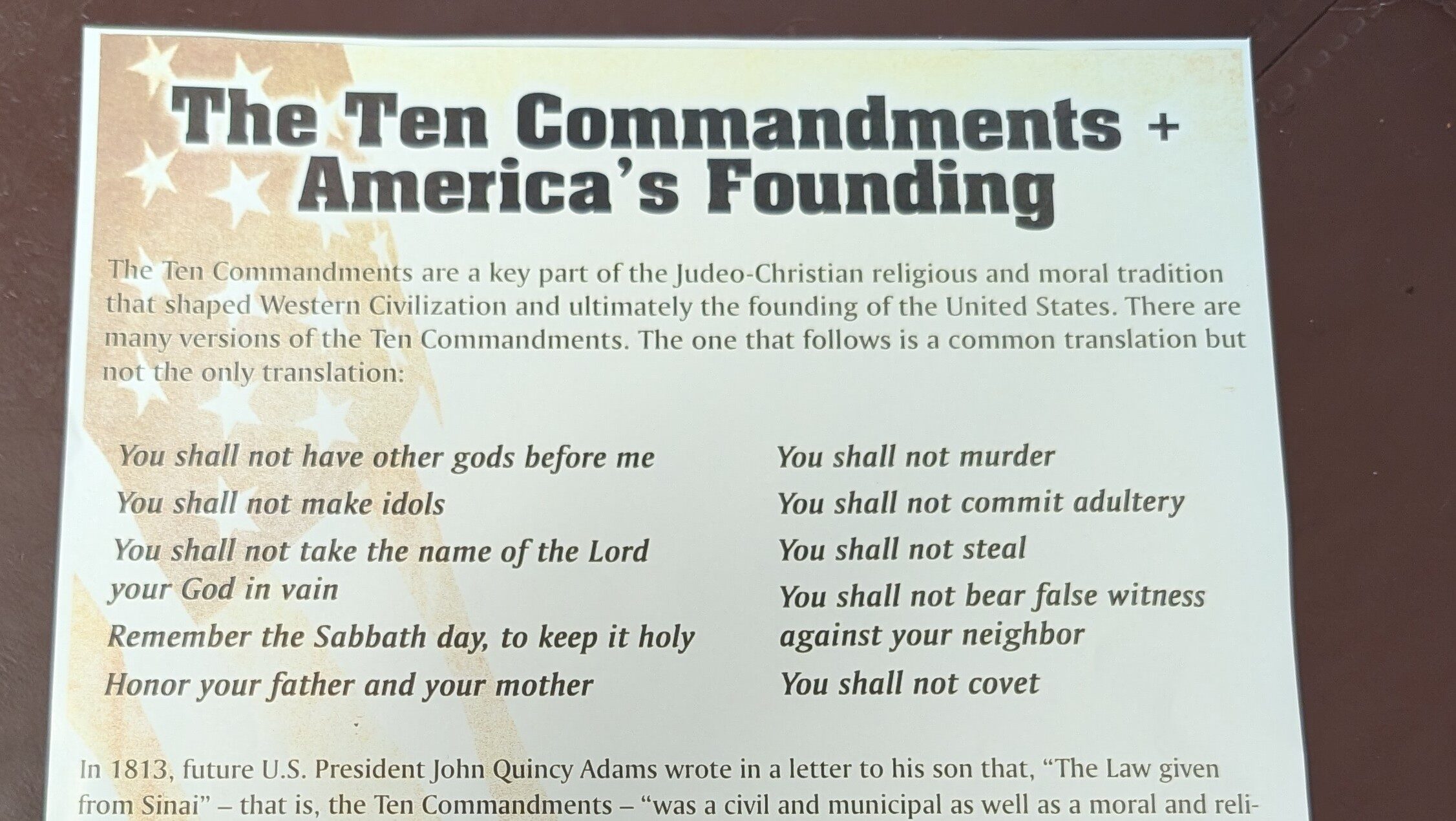
The Alabama House of Representatives passed a bill requiring the display of the Ten Commandments in history classrooms in grades 5-12.
Senate Bill 99, sponsored by Senator Keith Kelley, R-Anniston, and carried in the House by Representative Mark Gidley, R-Hokes Bluff would also require a display within common areas, such as cafeterias and school libraries, in every school within the district.
Opponents argue it crosses the line into religious endorsement and risks marginalizing students of different faiths. Bluff told lawmakers the intent is not indoctrination but education.
“This is restoring the knowledge to our students of the foundational historical precedent that really created this nation. It’s one of those foundational principles that was a guiding force in our civilization and many other Western civilizations, and it’s been kind of removed. Now we’re putting that back, and we’re setting it in historical settings, which is not indoctrination, strictly education,” said Gidley.
The legislation requires that a version of the Ten Commandments be displayed in public schools. Gidley acknowledged there are multiple versions but said the bill includes “a common one” frequently used in Christian traditions.
Lawmakers pressed the sponsor on how students from different religious backgrounds would interpret the display.
Gidley agreed but reiterated that the focus is on history.
“This is not about that. This is about what was going on in our nation and its foundation,” said Gidley.
Representative Kelvin Datcher, D-Birmingham, questioned whether the line between history and religion can truly be separated.
“I don’t want this to be a religious conversation, because we’re trying to say that it’s not a religious context that we are doing this, right? The tone and tenor, I think, tells the truth,” said Datcher.
He argued that the debate itself demonstrates the religious nature of the proposal and warned against romanticizing the past. He pointed to slavery, segregation and racial violence, noting that the bombing of Birmingham’s 16th Street Baptist Church was carried out by men who “were on a church pew the very next day.”
The lawmaker also questioned whether the state is prepared for the legal battle he believes will follow, raising constitutional concerns and referencing the First Amendment’s protections of religious freedom.
“We love to skip to the Second Amendment,” said Hatcher. “That’s our favorite one. But the first one’s there first, and there’s a reason why it’s there first.”
Representative Thomas Jackson, D-Thomasville, speaking from his own Christian faith, said the display of commandments without lived practice would be hollow.
“Don’t just put it on the wall,” said Jackson. “Put it in your heart. Live the commandments.”
Jackson argued that moral instruction cannot be legislated through signage.
“Just having them on… it’s meaningless,” said Jackson.
Questions were also raised about age appropriateness and educational priorities. Representative Marilyn Lands, D-Huntsville, said she had repeatedly heard from constituents asking why lawmakers were focused on religious displays instead of issues affecting day-to-day life.
“I don’t think anybody in here truly lives up to the commandments,” said Lands. “How many of us have made it through this day without coveting yet?”
Gidley countered that acknowledging the role of biblical principles in the nation’s founding does not equate to forcing belief.
“We cannot change who we are. We cannot change the foundation where we come from,” said Gidley. “The freedoms we experience today are because of the foundational principles laid.”
The measure passed 81-10 with 10 abstentions and now heads to Governor Ivey, setting up what many expect will be a court challenge over whether the displays are a violation of the Establishment Clause of the First Amendment.