Gov. Ivey’s steady leadership has made Alabama stronger
Nine years after crisis, Governor Kay Ivey leaves Alabama more stable and better positioned, with a strong foundation for future progress.
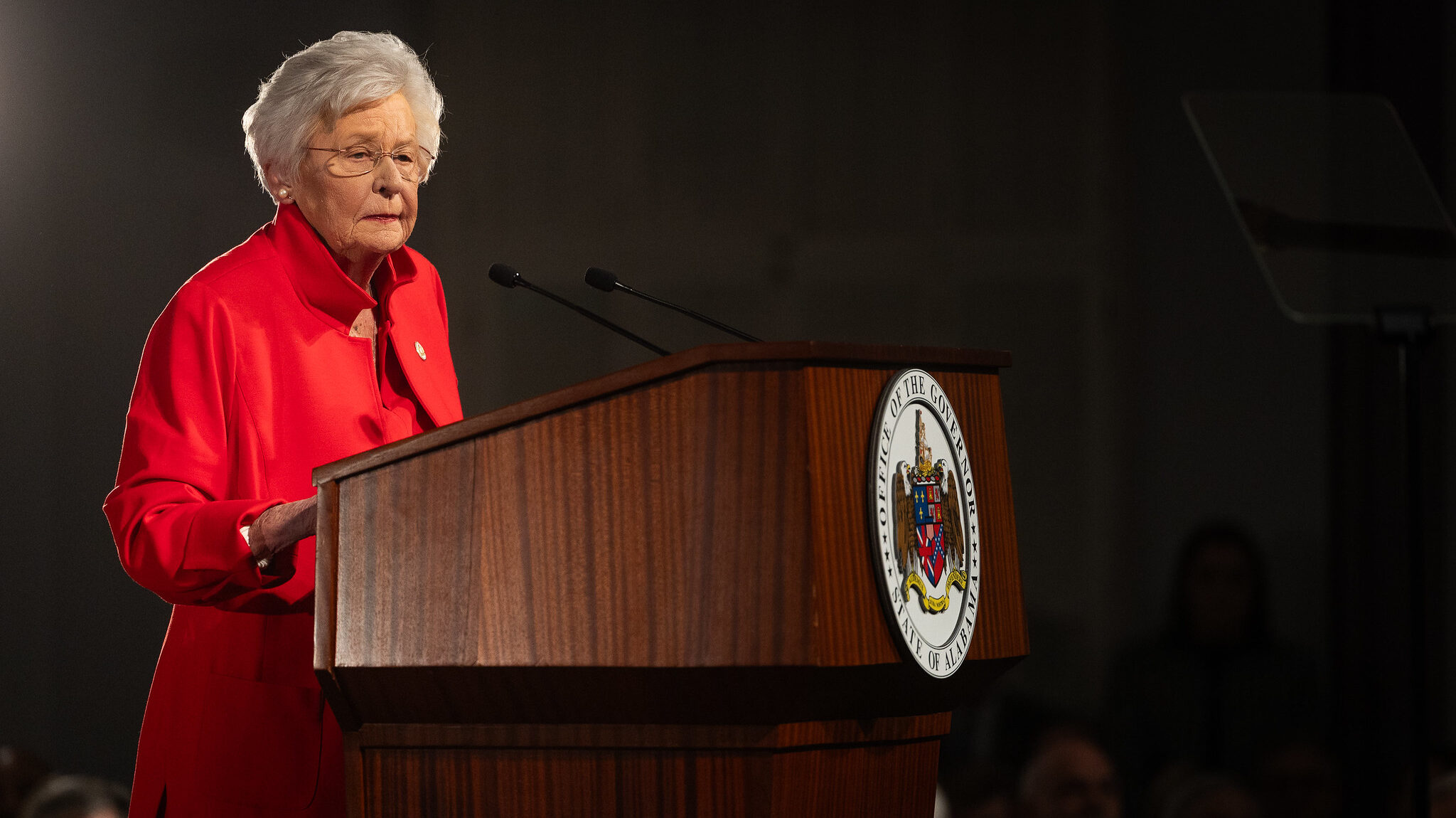
Nine years ago, on April 10, 2017, Kay Ivey took the oath of office under circumstances few governors ever face.
“There are moments when history moves quickly,” she said at the time. “Most governors have three months to prepare; I had three hours.”
It was a line that captured both the urgency of the moment and the uncertainty facing Alabama. The state had been rocked by scandal, trust in government was fragile, and stability—not ambition—was the immediate need.
Now, nearly a decade later, Alabama is doing something rare in politics: taking stock.
On the eve of that anniversary, the Alabama Building Renovation Finance Authority voted to rename the state office building at 501 Washington Avenue in Montgomery in her honor, following a legislative resolution urging the move.
The resolution reads less like a routine gesture and more like a closing argument. It describes Ivey as the longest continuously serving governor in state history and credits her with steadying “the ship of state” while presiding over billions in economic investment, major infrastructure expansion and measurable gains in education outcomes.
Those are not small claims. They also invite a larger question—one worth asking plainly:
What has defined Ivey’s governorship?
One of her most consistent refrains has been a simple one: seeking “Alabama solutions for Alabama problems.” It can sound like boilerplate—until you remember what she inherited. By that measure, Alabama today is more stable and better positioned than it was nine years ago.
In April 2017, Alabama did not need ideological experimentation. It needed stability, credibility and a governor willing to make government work again. By that measure, Ivey did more than steady the ship—she recalibrated it.
Not through sweeping rhetoric or national ambition, but through a governing style that, more often than not, placed policy ahead of politics. That distinction matters, especially in an era when the reverse has become the rule. Through economic development, infrastructure investment and incremental but real gains in education, Ivey pursued outcomes tailored to Alabama—not simply aligned with national partisan trends.
That approach did not make her the loudest voice in the room, but it made her, at critical moments, the essential one. In crisis, that steadiness reassured. In calmer times, it allowed the state to move forward without constant disruption.
The resolution points to more than $69 billion in capital investment and over 100,000 jobs created during her tenure, along with the Rebuild Alabama program funding projects in all 67 counties. It highlights expanded broadband access, water infrastructure funding and education reforms that moved Alabama from near the bottom of national rankings to more competitive ground.
There is substance behind those numbers—and consistency behind the approach.
Because while Ivey has governed as a stabilizing force, she has done so within a Republican Party that has grown more combative—nationally and, at times, here at home. She has navigated that tension carefully, aligning with conservative priorities where she believed they served the state, while resisting the kind of chaos and spectacle that too often substitutes for leadership.
That balance may ultimately define her legacy as much as any single policy. She did not seek to dominate the conversation; she sought to manage it. And in a state that once cycled through controversy and crisis, that approach delivered something Alabama had been missing: predictability.
She leaves Alabama more stable, more grounded and better prepared for what comes next—and that, in itself, is no small accomplishment.
The Legislature’s resolution answers the question of her impact with confidence, pointing to growth, investment and improved outcomes as evidence of lasting progress. History, as it often does, may render a more nuanced verdict.
What is clear is this:
Ivey inherited instability—and delivered order.
She did not govern for headlines. She governed for results. And in a political era in which spectacle often substitutes for leadership, that may be her most underappreciated strength.
The renaming of the building is symbolic, but symbols matter. They are how states tell their stories—who steadied them, who shaped them and who, at a critical moment, chose responsibility over spectacle.
Nine years ago, Alabama did not need a showman.
It needed a steward.
And Ivey met the moment—and left behind a foundation others will be judged by.