Gov. Ivey awards $460M to expand broadband
Investment will bring high-speed internet to 92,000 locations, strengthening economic growth, education access and long-term infrastructure across Alabama.
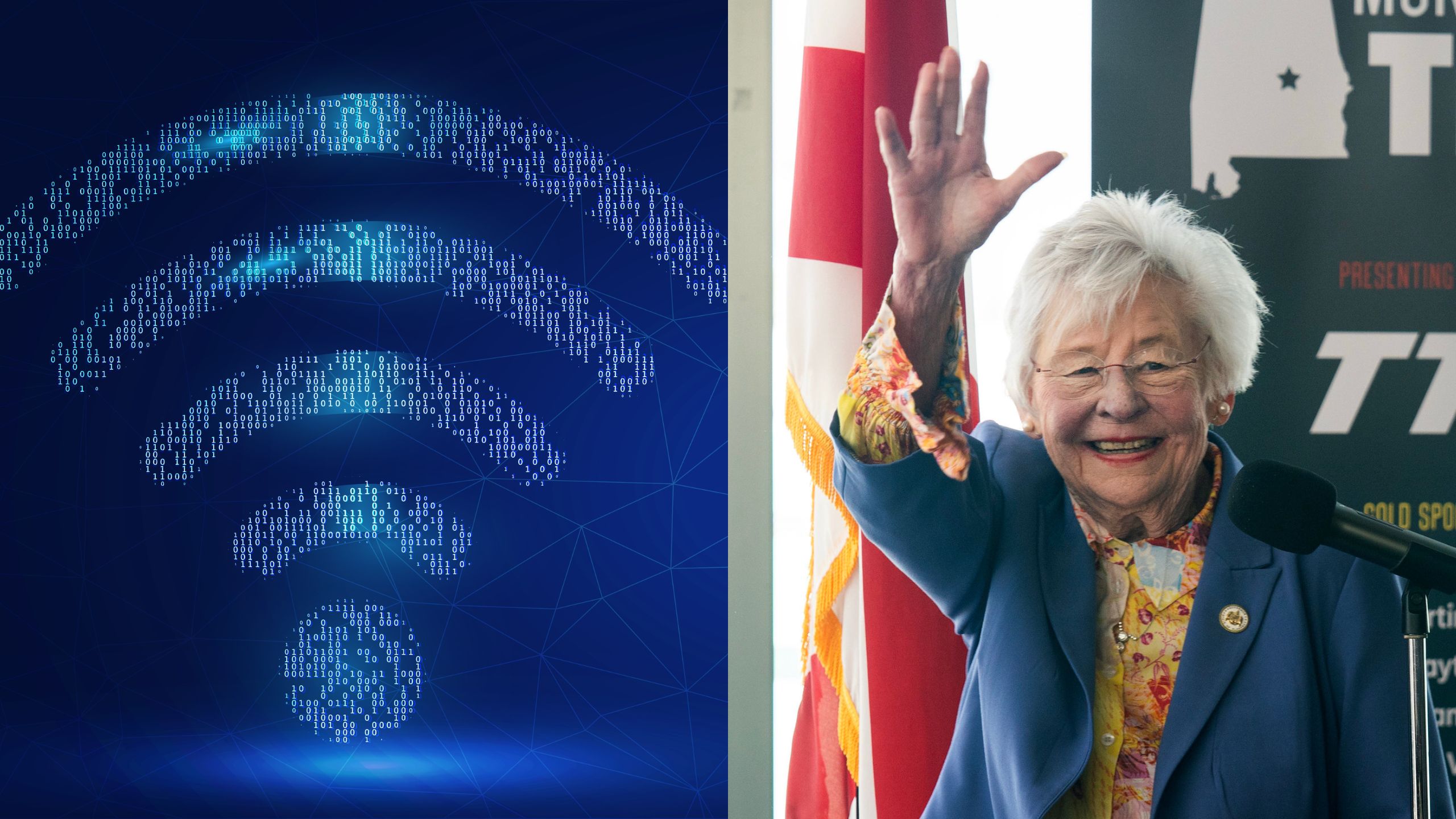
Governor Kay Ivey on Monday announced a landmark investment in Alabama’s future, awarding nearly $460 million in broadband expansion grants aimed at connecting tens of thousands of residents to high-speed internet.
The funding, made possible through federal approval of Alabama’s Broadband Equity, Access and Deployment, or BEAD, program, will support 63 projects reaching approximately 92,000 unserved locations statewide—one of the most significant infrastructure commitments in recent state history.
“This approval marks an important step forward in our work to close the digital divide in Alabama,” Ivey said. “Reliable high-speed internet is essential for economic growth, education, healthcare and everyday life.”
For Alabama, this moment represents more than a funding announcement. It reflects years of deliberate planning, coordination and sustained focus on building the kind of infrastructure that allows communities to compete in a modern economy.
Since 2017, state leaders, working alongside ADECA, local communities and private providers, have steadily advanced broadband expansion as a core economic priority. That long-term approach is now delivering results—positioning Alabama as a national model for how states can leverage public and private partnerships to solve complex infrastructure challenges.
Private sector leaders say the impact will be felt across every corner of the state.
“This is a transformational milestone in our state’s broadband journey,” said Energy Institute of Alabama CEO Clay Scofield. “As a result of Governor Kay Ivey, the Alabama Legislature, and electric utilities and internet service providers across our state developing, prioritizing, and implementing a plan for broadband expansion that has been a model for states across the country to follow, we have secured significant levels of funding from the federal government that will impact the lives of tens of thousands of Alabamians. This is yet another huge leap forward for our state and our mission to extend high-speed internet access to all Alabamians.”
The projects will rely primarily on fiber technology—widely considered the gold standard for speed and reliability—along with satellite and hybrid systems to reach more remote areas. State officials say the average cost per connection will remain below $5,000, while also preserving a substantial portion of federal funds for future broadband-related investments.
That combination—planning, partnership and disciplined execution—signals something larger than a single program.
Infrastructure, after all, is not just about what is built. It is about what becomes possible because it is built.
For rural communities, broadband means access to telehealth, online education and new business opportunities. For employers, it means a more competitive workforce. And for Alabama as a whole, it means closing the gap between potential and performance.
With contracts now moving forward and projects entering the implementation phase, the focus turns to delivery.
If executed as planned, this investment will not simply expand internet access—it will expand opportunity.