Birmingham conference helps Black local leaders tackle public safety
Public safety, housing and AI data centers shaped discussions as Black local officials shared strategies for addressing challenges in their communities.
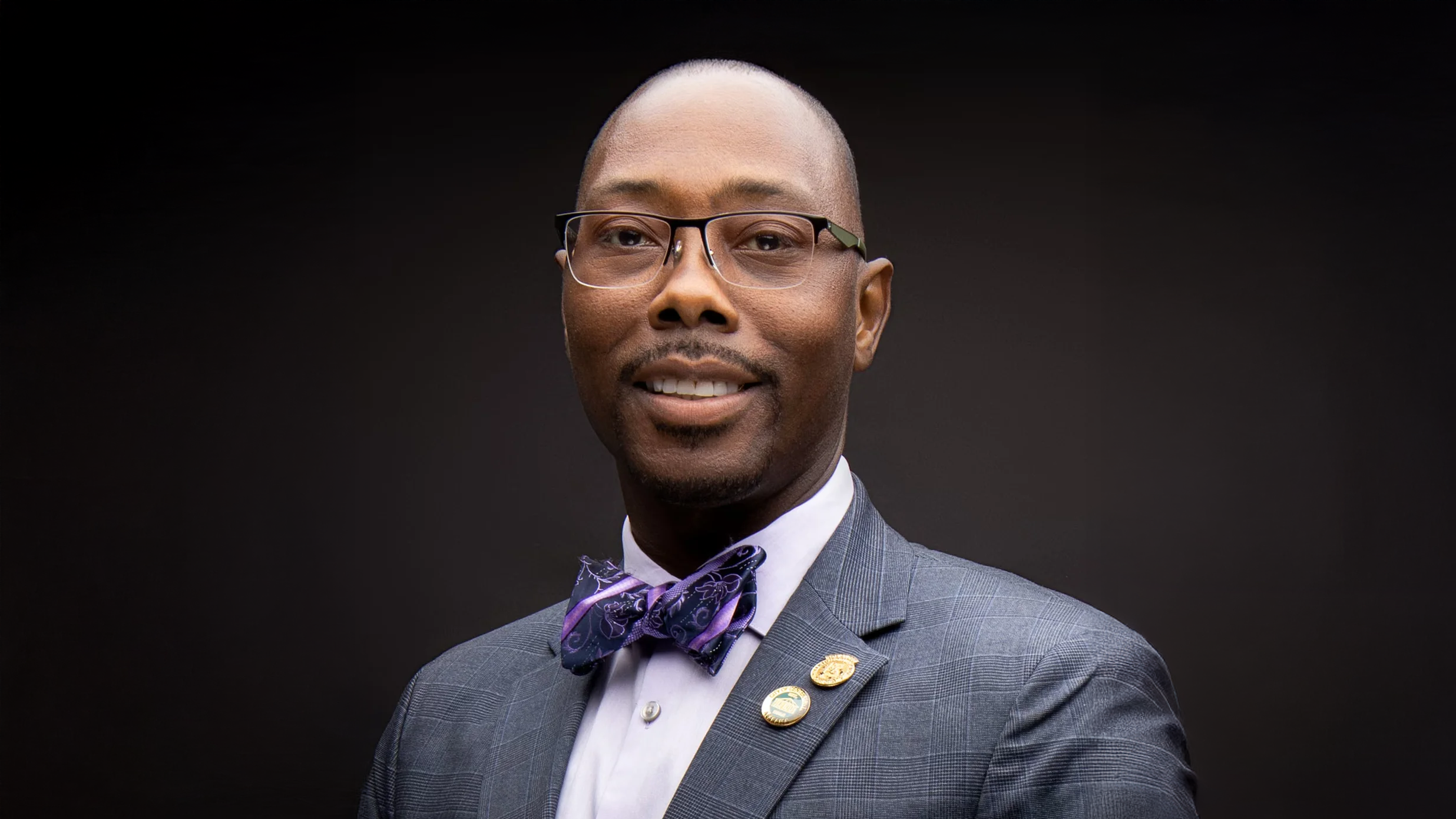
From July 15-18, the National League of Cities (NLC) and the National Black Caucus of Local Elected Officials (NBC-LEO) hosted its annual summer conference in Birmingham. APR spoke with Center Point Mayor and NBC-LEO President Bobby L. Scott Jr. to learn more about this year’s programming and some of his key takeaways from the event.
Scott told APR that this year’s conference—the first he had the opportunity to host as NBC-LEO president—was a great success.
“I was very excited and kind of worried about the conference. This was my first time ever actually hosting a conference and that whole planning process, and there’s a lot that goes into those,” Scott said. “NLC was great with their staff and helping us get everything done, and also the City of Birmingham was a huge part in that. But I think the conference turned out great. We had a lot of feedback that was positive, especially from our NBC-LEO membership. A lot of new members that had not attended a conference before found a lot of valuable resources in our topics, the camaraderie, the cooperation, the resources. So I think it turned out great and I look forward to diving into some of those issues and bringing back some of those things to our city.”
As for key takeaways, Scott said he found this year’s public safety programming particularly informative as Center Point continues to build its own police department independent of the Jefferson County Sheriff’s Office.
“Some of the things in this particular conference that were very helpful came during the public safety part,” Scott said. “Center Point is in a very integral part of forming its own police department and sitting right next to Birmingham, literally where our borders touch, I think that having [Birmingham Chief of Police] Michael Pickett and having former Chief Annetta Nunn come in and talk to us about things that they faced when they were in their early part of their career was very informative.”
“And also having our new chief there—who’s literally been on the job less than a month—hosting the panel to give ideas of, just because we are a new police department, we don’t have to do public safety the same way that everybody else is doing it,” he continued. “So, we want to make sure that mental health, all of those aspects, are considered for our community, and I think that was a huge and a very informative panel that we had with those former chiefs and current chiefs of police.”
Scott told APR that he also took away key lessons from a discussion around the use of surveillance cameras as a public safety measure.
“Reduction in crime cameras, that was a huge conversation with that panel and how we use cameras and how a lot of residents and your regular constituents see cameras, but also how those cameras help protect your community,” Scott said. “Birmingham has had a huge decrease in crime over this last year, year and a half, and so their model seems to be working. To be able to be in the same room, to get those nuggets from Chief Pickett on what their plans are, what they’ve done to change that culture, and to make sure that as we build our police department we are taking notes.”
Scott also highlighted this year’s programming around housing, hunger and affordability.
“One of our other topics was housing, another very important issue facing a lot of communities, smaller communities, across the country,” Scott said. “Again, everybody’s issues aren’t the same, but a lot of people do see the same issues throughout their community. We had a few housing experts come in to help us figure out houses that people can’t afford. We had a tour that we took in Woodlawn and their neighborhood that Habitat for Humanity has sort of revitalized and turned around. Jones Farm that provides food for those food deserts, rent-controlled properties where the rent doesn’t increase, free family care pharmacies—there were a lot of different things that people could pick up and take back and try to reinitialize or create a project around in their own communities.”
For Scott, having NBC-LEO as a resource for Black elected officials means having a safe space to discuss issues that are particularly important to minority communities and a place where newer officials can learn from more experienced peers.
“[It’s] a safe space where we can work out problems, we can cooperate, we can talk about issues that we all may have that are the same issues,” Scott said. “We don’t necessarily have the platform or the format to get together at the same table unless we’re at a conference like this. NLC has six constituency groups and we do kind of work across constituency groups a lot. But for NBC-LEO to bring in Black local electeds that may not have experience, this may be their first term, that you get to sit with somebody that’s been doing this for 20 years. And the conversation can be an open conversation where it’s free just to learn and to pick up that information.”
Looking ahead, Scott said he and NBC-LEO will begin preparing for the upcoming NLC City Summit, which will be hosted in Nashville, Tennessee, in November. He also already has ideas for next year’s summer conference, including discussions on artificial intelligence data centers.
“Something that was unexpected from the conference was the AI data center conversation that we had on the last day,” Scott said. “So being able to talk about the pros and cons is something that membership brought up and discussed, and that’s something we hope to be able to bring to our next conference. We all use it, but of course, nobody wants data centers in their neighborhood if they’re going to be loud and obtrusive and polluting water. So I think it’s good that we get all of the facts on the table and clear away some of the hearsay or the things that may not necessarily be true about data centers, that way cities are able to make better-informed decisions on whether they want one in their community or not.”