Sen. Britt discusses capital investment, regulatory thresholds in hearing with Fed chair
Warsh signaled optimism about business spending and backed tailored bank rules to protect competition while limiting bailout risks.
Federal Reserve Chair Kevin Warsh presented the Fed’s Semiannual Monetary Policy Report before the Senate Banking Committee last week.
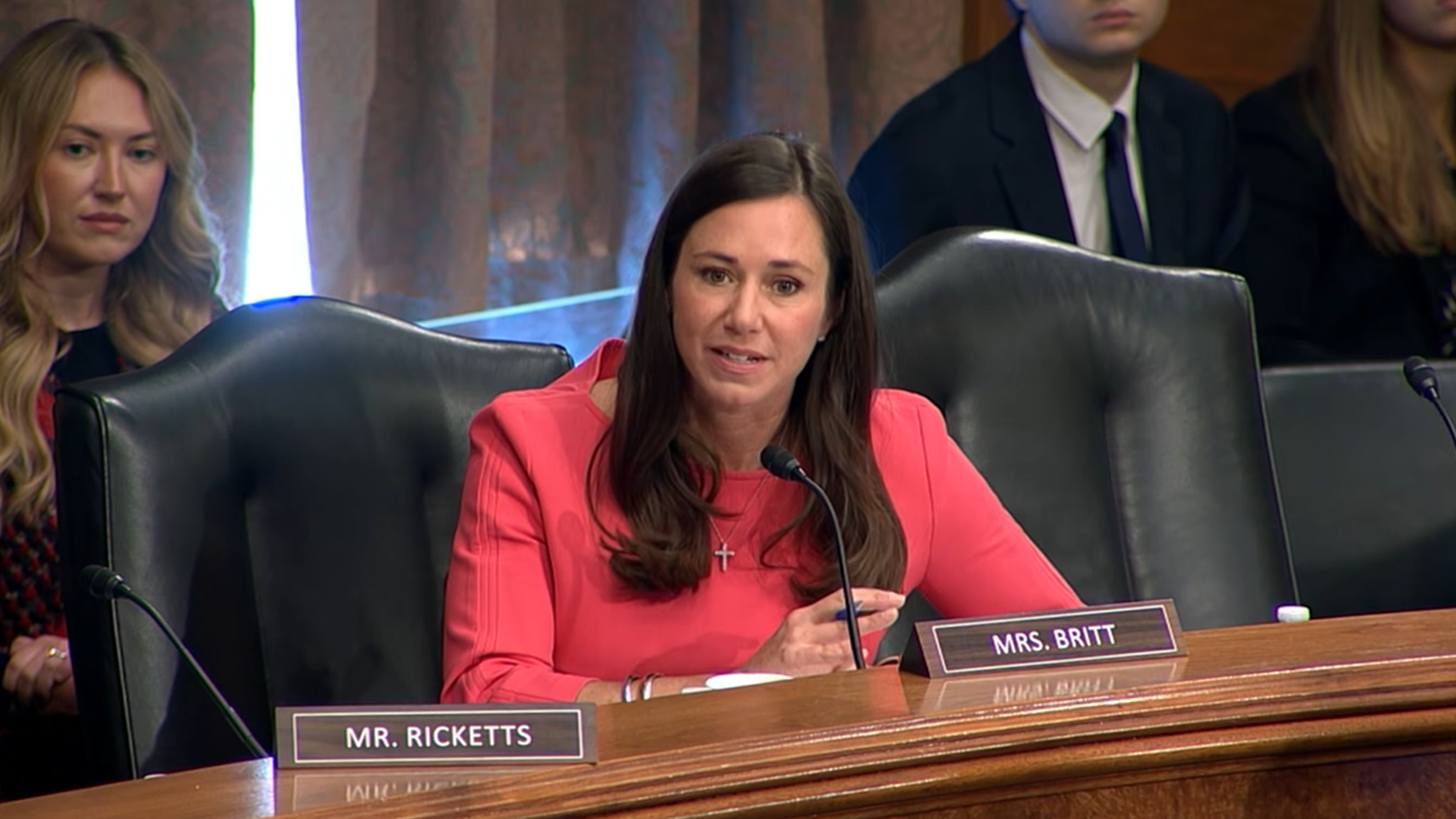
During the hearing, Senator Katie Britt, R-Alabama, highlighted increased business investment across the country and called for updated regulatory thresholds as banks move into new supervisory categories.
“In this year’s Monetary Policy Report, one of the most encouraging themes is the increase in business investment that we’re seeing across the country,” Britt said. “In Alabama and many places, we’re seeing companies expand, manufacturers grow, and communities are benefiting from that investment. I believe that these are good signs and that they’re also important for the future, because they help us determine whether America remains the most competitive economy in the world.”
Britt asked Warsh what economic data indicated that current investments were laying the foundation for stronger long-term growth and greater American competitiveness.
Warsh said increased capital investment was a positive sign for the economy because it reflected the private sector’s confidence in continued gross domestic product growth.
“This is what most countries are searching for,” Warsh said. “This is the seed core of the next group of job creation and productivity. The trend is our friend here, and this business capital investment is contributing massively to the GDP we’ve seen in the last 12 months.”
Warsh said he expected the trend to continue.
“What gives me optimism about it? Well, when the private sector deploys this amount of capital, they must see something shiny at the other end of that rainbow,” Warsh said. “They must see a very good return on investment. That’s why they’re taking this capital and they’re putting it to work.”
Britt then turned to regulatory reform, urging the Fed to update its regulatory tailoring framework and the thresholds used to determine the rules that apply to banks of different sizes.
“Some banks are already approaching and crossing into new tailoring categories, and they’re making staffing and compliance and long-term business decisions based on thresholds that haven’t been updated since 2019,” Britt said. “How are you thinking about updating these tailoring frameworks when it comes to what banks can expect to see in proposals in the future?”
Warsh said Federal Reserve Vice Chair for Supervision Miki Bowman had been working to modernize the banking system and streamline regulations.
“Vice Chair Bowman has been working on these initiatives—modernizing our banking systems, streamlining regulations so that the rules that apply to the systemically important financial institutions are not one-size-fits-all for every other,” Warsh said.
Warsh said the thousands of banks and other credit providers operating across the United States represented a strength of the American economy.
“I’d rather have that system than what most of our G20 peers have, where they have half a dozen institutions implicitly backed by their government,” Warsh said.
Warsh said he expected reforms to banking supervision and regulation.
“The reforms we’ve been putting in place over the last 15 years coming out of Dodd-Frank—as we learned in the Silicon Valley Bank example and the First Republic example—they didn’t work perfectly,” Warsh said. “My predecessors had very little choice but then to do another overall bailout—we don’t want that to happen again.”
Warsh said the Fed wanted to tailor regulatory and capital requirements to support a banking system that was safe, sound and competitive.
Britt thanked Warsh for his comments and his commitment to serving as Federal Reserve chair, a position he had held for seven weeks. Warsh succeeded Jerome Powell, who stepped down as chair in May after President Donald Trump publicly criticized his refusal to lower interest rates.
“I just want to say thank you for your commitment in the first seven weeks to performance, to accountability, to responsibility and to integrity,” Britt said. “I appreciate what you’re doing and look forward to continuing to work with you.”