Alabama Supreme Court expedites Tuberville appeal as ballot deadline looms
The Court accelerated briefing in the residency challenge, but Alabama’s deadline for replacing a party nominee could pass before the appeal is fully briefed.
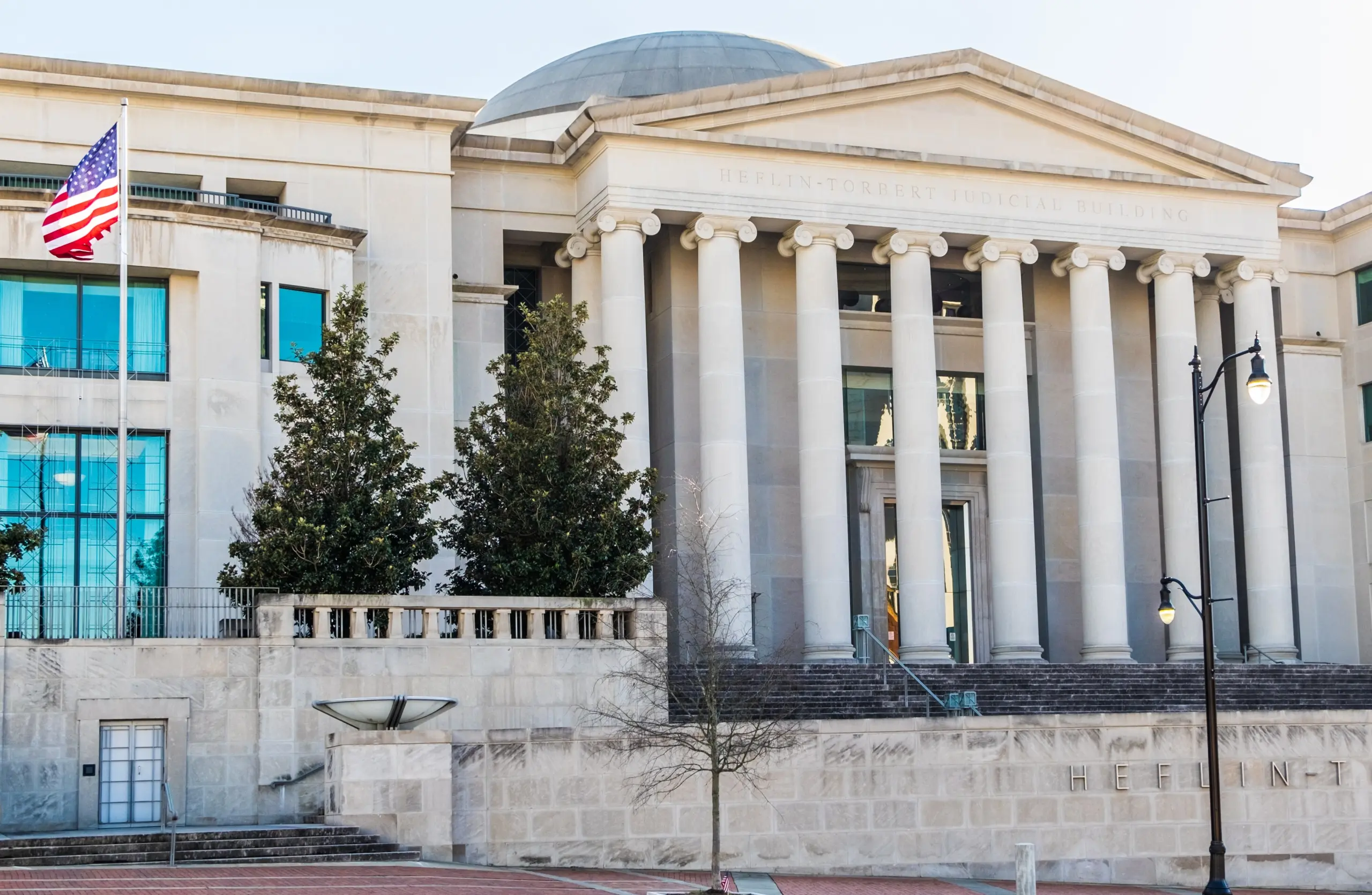
The Alabama Supreme Court on Tuesday ordered expedited briefing in the legal challenge involving U.S. Sen. Tommy Tuberville’s eligibility for governor, setting an accelerated schedule that could nevertheless extend beyond Alabama’s deadline for replacing a party nominee on the November ballot.
The Court granted a motion to expedite filed by Brook Lynn Dorgan and Justin Jude LeBlanc, the two Alabama voters appealing the dismissal of their challenge to Tuberville’s eligibility as the Republican nominee for governor.
Under the order, Dorgan and LeBlanc must file their opening brief within 21 days after completion of the appellate record and no later than Aug. 7. Tuberville will then have 14 days from the filing of that brief to respond, followed by seven days for the challengers to file a reply.
If the parties use the full amount of time allowed, Tuberville’s response could be filed as late as Aug. 21 and the challengers’ final reply as late as Aug. 28.
But Alabama law establishes an earlier deadline with potentially significant consequences for the governor’s race.
Under Alabama Code §17-13-23, when a vacancy occurs in a party nomination through death, resignation, revocation “or otherwise,” the party’s state executive committee may choose a replacement. For a statewide office, however, the replacement candidate’s name must be filed with the secretary of state no later than 76 days before the election.
For the Nov. 3 general election, that deadline falls on Aug. 19.
That means the statutory deadline for the Alabama Republican Party to file the name of a replacement nominee could arrive two days before Tuberville’s response is due and nine days before the challengers’ final reply could be filed.
The parties are not required to wait until those deadlines, and the Supreme Court could act before the maximum briefing period expires. But the schedule established Tuesday does not ensure that the appeal will be fully briefed — much less decided — before the statutory window for replacing the Republican nominee closes.
A second deadline follows on Aug. 24.
Alabama Code §17-6-21 requires party nominations to be finalized 71 days before a general election. Amendments submitted after that point must still be accepted, but cannot require ballots to be reprinted. The statute further provides that when a candidate is disqualified by a political party or withdraws after the deadline, the candidate’s name remains on the ballot and cannot be replaced by another candidate. Votes cast for that candidate are not certified.
The Alabama Secretary of State’s official 2026 election calendar likewise lists Aug. 24 as the deadline for political parties to submit amendments or corrections to candidate certifications and for candidates to withdraw their names from the general-election ballot. The secretary of state is scheduled to certify opposed candidates for state and federal offices to probate judges on Aug. 26.
Court signals urgency
Tuesday’s order leaves little doubt that the Supreme Court intends for the appeal to move faster than an ordinary case.
The Court warned attorneys that requests for extensions “will be disfavored” and said any extension would require a showing of good cause supported by evidence. The justices also suspended the extension provision normally available under Rule 31(d) of the Alabama Rules of Appellate Procedure.
Chief Justice Sarah Stewart and Justices Shaw, Wise, Bryan, Sellers, Mendheim, McCool and Parker concurred in the order.
Justice Greg Cook recused. The order gives no reason for Cook’s recusal.
The Court did not schedule oral arguments and did not establish a deadline for issuing a decision.
The appeal is not yet about where Tuberville lives
The Supreme Court’s order does not determine whether Tuberville meets Alabama’s constitutional residency requirement.
No court has yet made that determination.
Article V, Section 117 of the Alabama Constitution requires a governor to have been a resident citizen of Alabama for the seven years immediately preceding the election.
Dorgan and LeBlanc contend Tuberville does not satisfy that requirement. Tuberville has maintained that he is an Alabama resident and is constitutionally qualified to serve as governor.
The question currently before the Supreme Court is more fundamental: Can the challengers use a quo warranto action to obtain a judicial determination of Tuberville’s eligibility before the election?
Montgomery County Circuit Judge Brooke Reid dismissed the lawsuit on July 9 after concluding that the circuit court lacked jurisdiction over the challengers’ remaining quo warranto claim at this stage of the election process.
Her ruling did not determine where Tuberville is legally domiciled or whether he satisfies the Constitution’s seven-year residency requirement.
That distinction is central to the appeal.
Quo warranto is traditionally used to challenge the right of a person to hold or exercise public office. Tuberville does not currently hold the office of governor. He is the Republican Party’s certified nominee.
Reid found no controlling Alabama appellate decision expressly authorizing a quo warranto action against a certified nominee before that person has been elected or assumed office. She likewise found no decision expressly prohibiting such an action.
The question is now before the Alabama Supreme Court.
Even a successful appeal may not decide eligibility
The timing becomes more consequential because a victory for Dorgan and LeBlanc at the Supreme Court would not necessarily mean Tuberville is immediately declared ineligible.
If the Supreme Court concludes that Reid had jurisdiction to hear the quo warranto action, the ordinary result could be a reversal of the dismissal and a return of the case to Montgomery Circuit Court for further proceedings.
The case was dismissed before discovery, before an evidentiary hearing and before the circuit court made factual findings concerning Tuberville’s domicile.
That means the underlying residency dispute has yet to be litigated on its merits.
Further proceedings could include discovery, presentation of evidence and a judicial determination of whether Tuberville actually meets the constitutional qualification.
By that point, depending on how quickly the Supreme Court and circuit court act, Alabama’s statutory deadline for replacing a party nominee could already have passed.
Tuesday’s order does not address what remedy might remain available if the challengers ultimately prevail after those election deadlines.
For now, the Supreme Court has determined that the appeal warrants expedited consideration.
But even under the accelerated timetable, the legal challenge and Alabama’s election calendar are now moving toward the same critical August deadlines — with no guarantee that the underlying question of Tuberville’s constitutional eligibility will be resolved before the opportunity to change the November ballot closes.